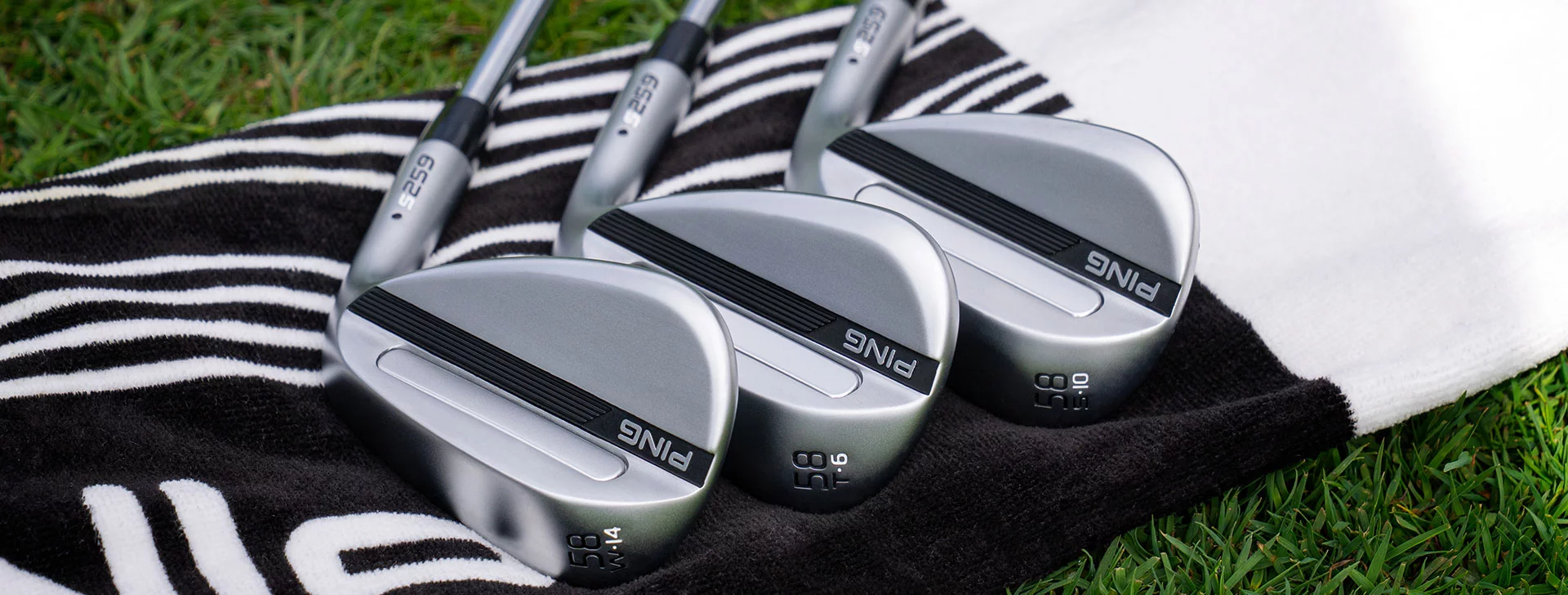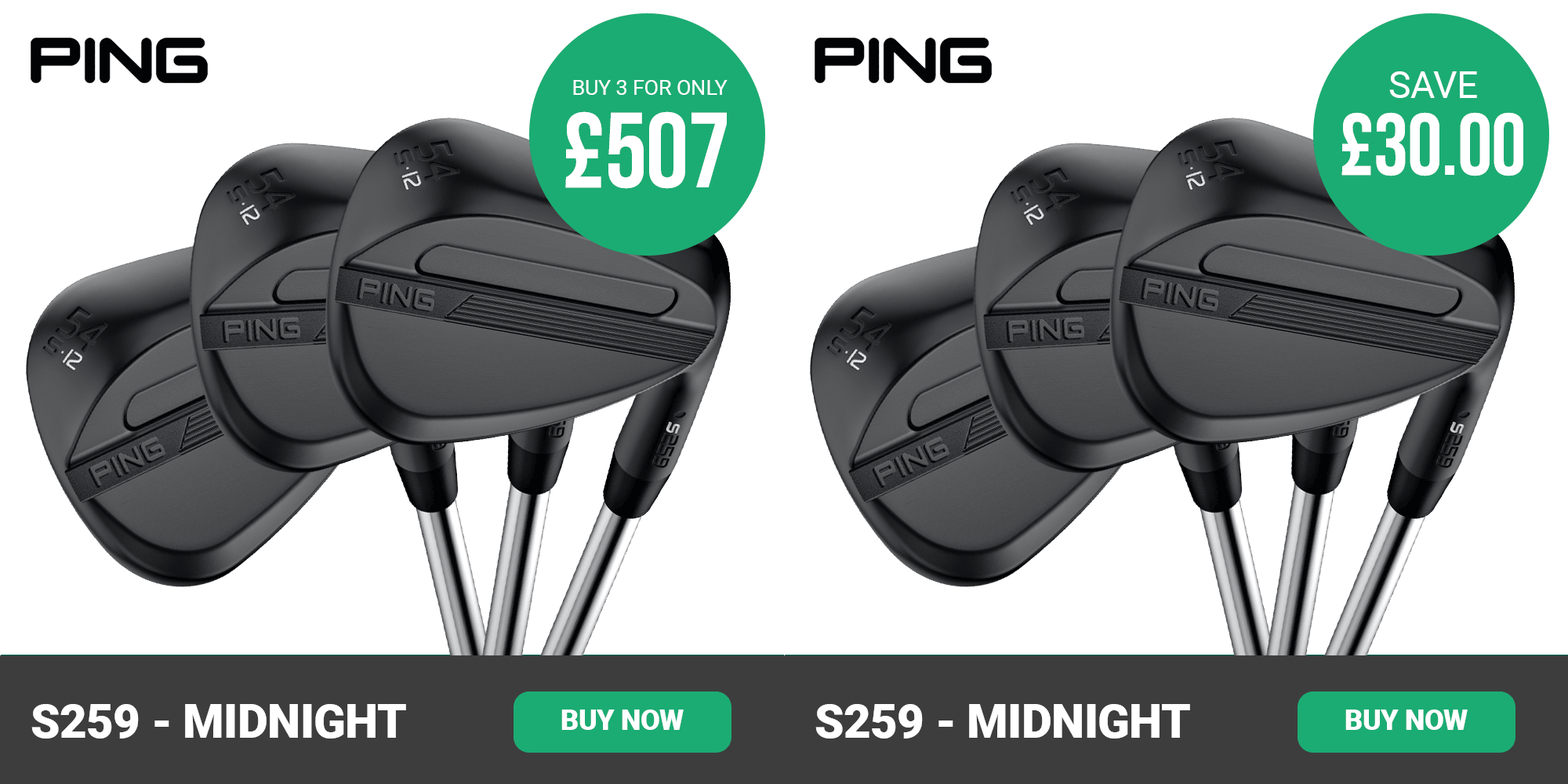


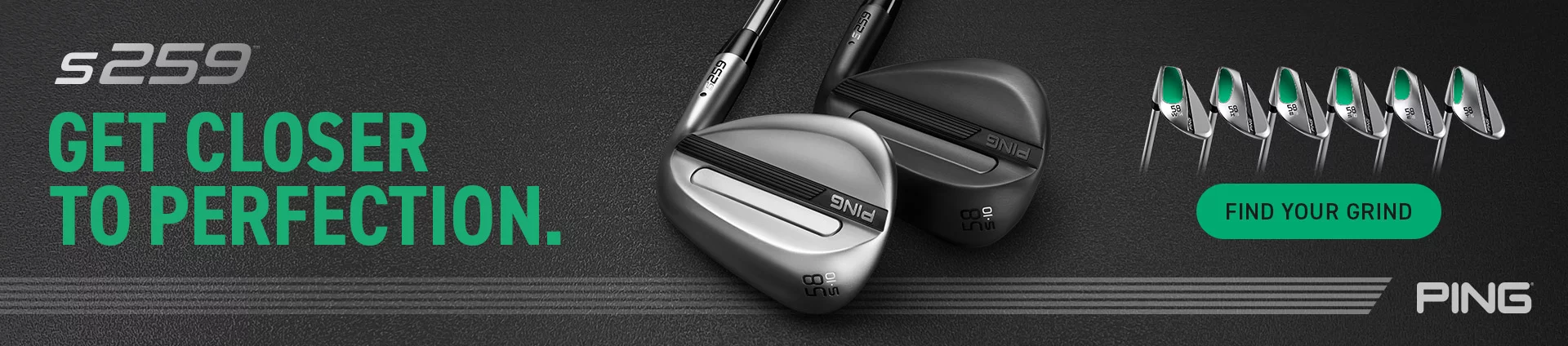
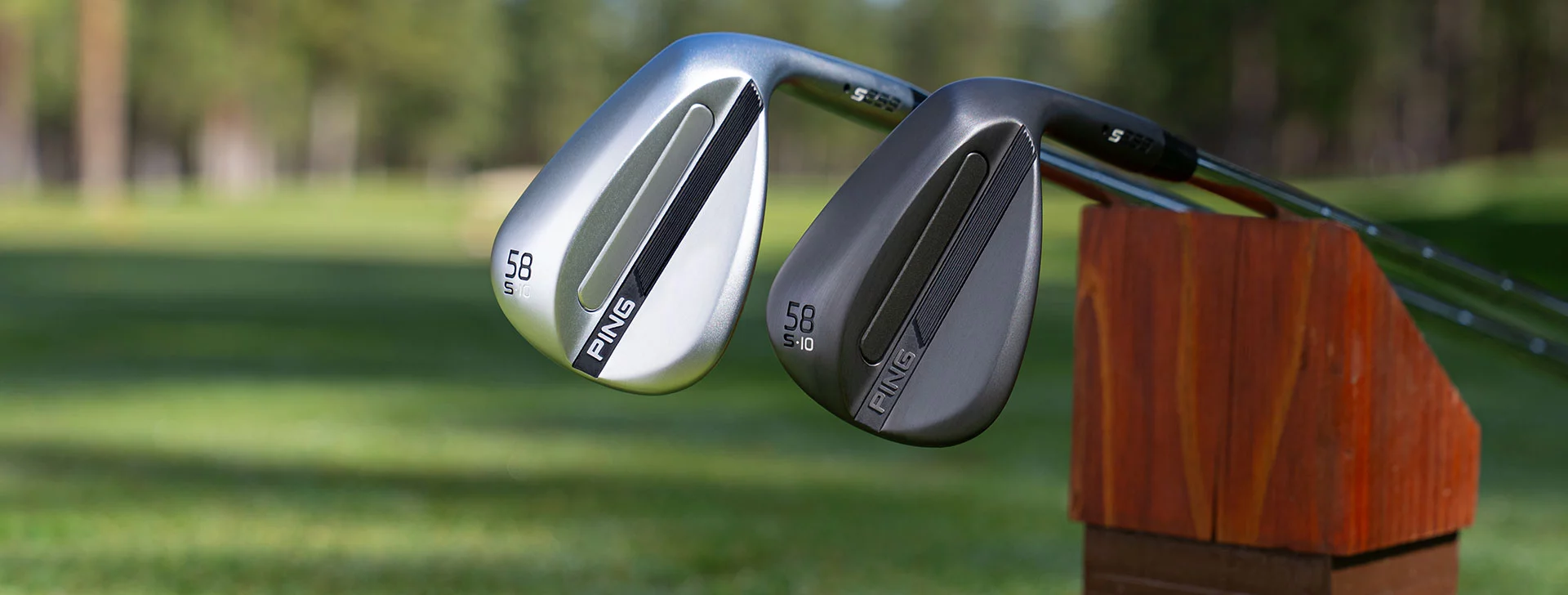
The Ping S259 wedges are built for golfers who want more control, more consistency and more confidence in the scoring zone. From crisp full shots to delicate greenside touch, the standout feature of the S259 range is how well it can be matched to your swing and your course conditions - thanks to a wide selection of lofts and clearly defined grind options.
In this Golf Gear Direct buying guide, we will break down every S259 grind, explain who it is for, how it helps, and how to build a wedge set that gives you the shots you actually need on the course.
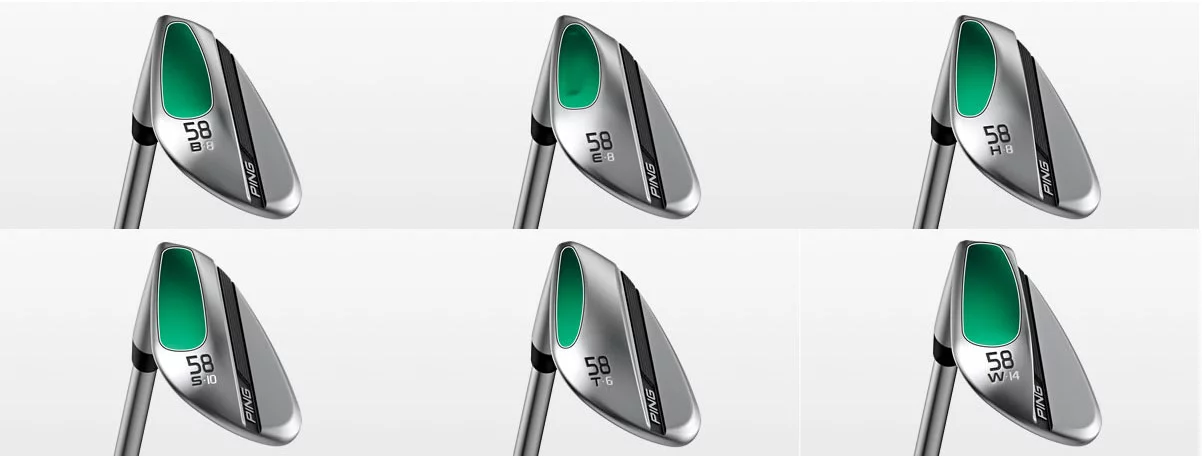
Loft tells you how high the ball should launch. Grind tells you how the wedge behaves through the turf and sand. Pick the right grind and the sole works with your swing - helping the club glide, keeping the leading edge stable, and improving strike quality on both full and partial shots. Pick the wrong one and you can fight the ground - digging on steeper swings, bouncing into the ball on tight lies, or struggling to control contact from bunkers and rough.
The S259 lineup makes grind selection easier because each grind has a clear purpose - based on attack angle, how much shaft lean you play with, and the turf conditions you normally see.
| Grind | Designed For | Key Benefit | Loft Availability |
|---|---|---|---|
| B Grind | Shallow attack angle and neutral face delivery, low bounce | Cleaner contact from tight lies and firm turf | 58°, 60° |
| W Grind | Steep attack angle with a lot of handle lean | Max forgiveness and stability through the turf | 50°, 52°, 54°, 56°, 58°, 60° |
| H Grind | Steeper attack angle, best in softer conditions | More bounce help when the ground is soft | 54°, 56°, 58°, 60° |
| E Grind (re-designed) | Ultimate bunker club, low bounce on square or slightly open face shots | Confidence from sand with a predictable strike | 58°, 60° |
| T Grind (re-shaped) | Most versatile, ideal for medium to firm turf conditions | Shot-making freedom without feeling too demanding | 58°, 60°, 62° |
| S Grind | Fits a wide variety of conditions and techniques | Heel and trailing edge relief for added versatility | 46°, 48°, 50°, 52°, 54°, 56°, 58°, 60° |
The S Grind is built to handle a wide range of lies and shot types, making it a great starting point if you want one golf wedge that does a bit of everything. Its key advantage is the heel and trailing edge relief, which helps the club sit nicely at address and makes it easier to open the face for higher, softer shots without the leading edge lifting too far off the ground.
If you play a mix of pitches, chips, bump-and-runs and full approach shots, and you do not want to overthink wedge selection, the S Grind is often the most sensible fit - especially in the lower lofts where gapping and full-shot control matter.
The W Grind is designed for golfers who deliver the club on a steeper angle of attack, particularly if you play with plenty of handle lean. In simple terms, it helps you avoid digging. The sole is built to provide stability and forgiveness through the turf, which can be a huge help on softer fairways and thicker rough.
If your typical miss is a heavy strike, or you feel like your wedge wants to stick in the ground, the W Grind can make your contact more consistent and your distances more predictable. It is also an excellent choice if you want a wedge that feels steady and reliable on fuller swings.
The H Grind is aimed at players with a steeper attack angle who regularly play in softer conditions. When the ground is soft, the leading edge can dig quickly, especially on half shots where speed and strike vary more. The H Grind is designed to help the sole work through the turf more smoothly, giving you added confidence on approaches and controlled pitches.
If you play a lot of parkland golf in wetter months, or your home course stays soft for long periods, the H Grind is worth serious consideration - particularly in the sand and lob wedge lofts.
The B Grind is made for golfers with a shallower attack angle and a more neutral face delivery, paired with low bounce. This is the type of grind that can feel excellent on firm turf, tight fairway lies and compacted ground, because it allows the leading edge to sit closer to the surface and get under the ball cleanly.
If you are a picker rather than a digger, or you play links-style conditions where the turf is tight and the sand is firm, the B Grind can help you clip the ball crisply and control strike height on the face.
The re-designed E Grind is presented as the ultimate bunker club in the S259 family. It is designed to perform best when played with a square face or slightly open face, providing a predictable strike and more confidence in sand.
If you prefer a simple bunker technique - aim, set the face slightly open, splash it out - the E Grind is built to support that style. It can also be a smart choice if bunkers are the weakest part of your short game and you want a lob wedge option that feels purpose-built for sand.
The re-shaped T Grind is positioned as the most versatile option for medium to firm turf. This is typically the grind golfers lean towards when they like to vary face angle and trajectory - playing floaty pitches, low spinners, open-faced lobs and touch shots from tight lies.
If you enjoy creativity around the greens and your course conditions are not overly soft, the T Grind can give you more shot options without feeling like you have to force the club to behave.
If you are not sure where to start, use these quick checkpoints:
The best wedge setup is the one that covers your distance gaps without forcing you into uncomfortable swing lengths. A simple approach is to start from your pitching wedge loft, then add wedges in consistent steps so you always have a comfortable full swing and an easy three-quarter option.
A popular strategy is to keep the lower lofts more stable and forgiving (often S Grind or W Grind), then choose your highest loft based on how you play short-game shots (T Grind for creativity, E Grind for bunkers, B Grind for tight lies).
If you want a quick way to validate your choice, Ping's WebFit Wedge tool can point you towards the most suitable loft and grind combinations based on your delivery and playing conditions. It is especially useful if you are deciding between two similar options - for example, W Grind versus H Grind in softer conditions, or T Grind versus B Grind on firmer turf.
What is the easiest S259 grind to choose?
If you want a dependable option that fits a wide range of golfers and lies, the S Grind is the most straightforward place to start.
Which grind is best if I keep hitting wedges heavy?
Golfers who hit heavy shots often have a steeper delivery. The W Grind is designed for maximum forgiveness, while the H Grind is also a strong fit in softer conditions.
Which grind is best for links golf and tight lies?
On firmer turf and tight lies, shallower swingers often prefer lower-bounce options. The B Grind is designed for a shallow attack and neutral delivery, while the T Grind is also built for medium to firm conditions with a versatile shape.
Do I need different grinds for different lofts?
Not always, but it can help. Many golfers choose a stable, forgiving grind in the gap and sand wedge lofts, then pick a more specialist option in the lob wedge loft to match their favourite short-game shots.
Is the E Grind only for bunkers?
It is presented as the ultimate bunker club, but it can still be used for greenside shots - especially if you play the face square or only slightly open. If you regularly play open-faced flop shots, you may prefer the T Grind or S Grind depending on turf conditions.
If you are not sure where to start, use these quick checkpoints:
The best wedge setup is the one that covers your distance gaps without forcing you into uncomfortable swing lengths. A simple approach is to start from your pitching wedge loft, then add wedges in consistent steps so you always have a comfortable full swing and an easy three-quarter option.
A popular strategy is to keep the lower lofts more stable and forgiving (often S Grind or W Grind), then choose your highest loft based on how you play short-game shots (T Grind for creativity, E Grind for bunkers, B Grind for tight lies).
If you want a quick way to validate your choice, Ping's WebFit Wedge tool can point you towards the most suitable loft and grind combinations based on your delivery and playing conditions. It is especially useful if you are deciding between two similar options - for example, W Grind versus H Grind in softer conditions, or T Grind versus B Grind on firmer turf.
What is the easiest S259 grind to choose?
If you want a dependable option that fits a wide range of golfers and lies, the S Grind is the most straightforward place to start.
Which grind is best if I keep hitting wedges heavy?
Golfers who hit heavy shots often have a steeper delivery. The W Grind is designed for maximum forgiveness, while the H Grind is also a strong fit in softer conditions.
Which grind is best for links golf and tight lies?
On firmer turf and tight lies, shallower swingers often prefer lower-bounce options. The B Grind is designed for a shallow attack and neutral delivery, while the T Grind is also built for medium to firm conditions with a versatile shape.
Do I need different grinds for different lofts?
Not always, but it can help. Many golfers choose a stable, forgiving grind in the gap and sand wedge lofts, then pick a more specialist option in the lob wedge loft to match their favourite short-game shots.
Is the E Grind only for bunkers?
It is presented as the ultimate bunker club, but it can still be used for greenside shots - especially if you play the face square or only slightly open. If you regularly play open-faced flop shots, you may prefer the T Grind or S Grind depending on turf conditions.