


Choosing the right golf irons is about much more than finding a set that looks good in your bag. The irons you play affect your distance, accuracy, ball flight and confidence on approach shots, so selecting the right design can make a genuine difference to your performance.
With so many options available, from forgiving cavity-back irons to compact forged models, knowing where to begin isn't always straightforward. Your handicap is a useful starting point, but swing speed, strike consistency, shaft choice and preferred feel all play an important role.
At Golf Gear Direct, we stock irons for every stage of the game, including beginner-friendly sets, game improvement irons and premium models for accomplished players.
This guide explains how to choose golf irons that suit your ability, what features to look for and which models are worth considering before making your next purchase.

In this guide, we'll take a deep dive into golf irons and help you decide if one is the right fit for your game.
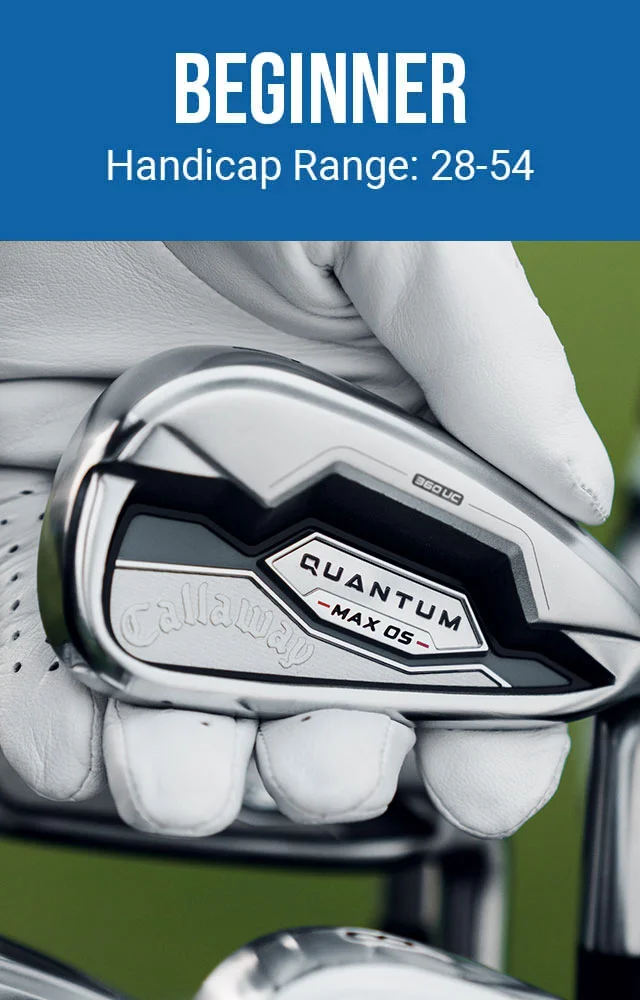
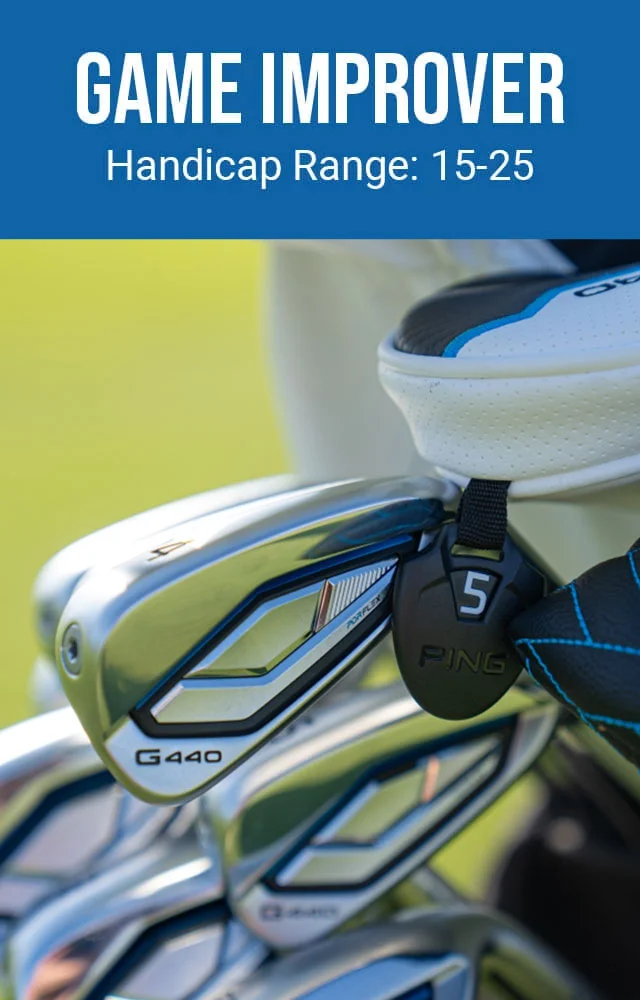
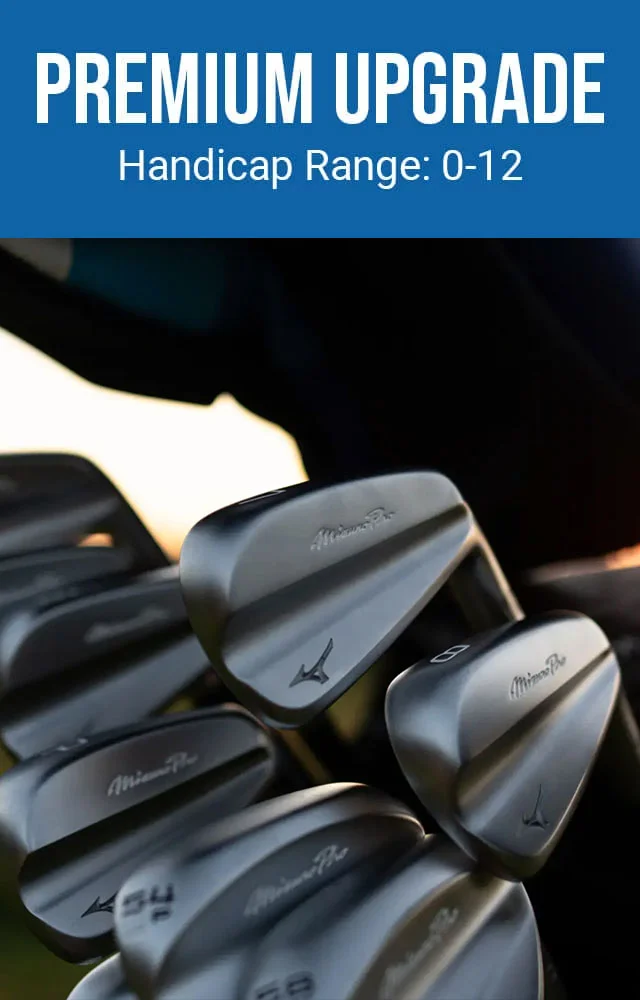
The best way to choose golf irons is to start with your ball-striking ability, then choose clubs based on how much forgiveness, launch and control you need. Beginners generally benefit from larger, more forgiving clubheads, while improving golfers may prefer a balance of distance and feel. Consistent ball strikers can consider compact players' irons. Skill level, shaft flex, length, lie angle and loft gapping should also be checked before buying.
Use this comparison to narrow down the type of iron that could suit your game.
| Golfer Type | Main Priority | Iron Type | GGD Recommendation |
|---|---|---|---|
| Beginner | Easy launch and forgiveness | Super game improvement | Cobra King Max |
| High handicap | Consistent distance | Game improvement | Ping G440 |
| Improving golfer | Distance and control | Game improvement | TaylorMade Qi Max |
| Mid handicap | Forgiveness with refined feel | Players' distance | TaylorMade P790 |
| Mid to low handicap | Control and consistency | Players' distance | Titleist T250 |
| Low handicap | Shot shaping and feedback | Players' cavity | Titleist T100 |
| Accomplished ball striker | Traditional feel and workability | Players' iron | Mizuno Pro S-1 |
| Slower swing speed | Easier launch | High-launch iron | TaylorMade Qi Max HL |
These recommendations are starting points. A custom fitting can help determine which combination delivers the best launch, distance and consistency for your individual swing.
If you're relatively new to golf, your first priority should be making consistent contact and getting the ball airborne.
A larger clubhead, wider sole and perimeter weighting can make off-centre strikes less punishing, and cavity-back irons offer more forgiveness than muscle-back irons. These features are commonly found in super game improvement and game improvement irons.
Rather than choosing compact irons because professionals use them, look for clubs that provide confidence at address and make everyday shots easier.
Recommended irons: Cobra King Max
The Cobra King Max range is worth considering for golfers who want a confidence-inspiring profile and forgiveness-focused design, especially for higher handicap golfers.
Shop Cobra King Max Golf Irons
As your strike becomes more consistent, you may want modern irons that offer greater control without giving up the forgiveness that helped you improve, and many now use varying face thickness to help preserve speed across a larger sweet spot.
Game improvement and players' distance irons are particularly relevant here.
Models such as the Ping G440 and TaylorMade Qi Max provide useful options for golfers looking to improve consistency, while the TaylorMade P790 offers a more compact alternative for players whose ball striking is developing. Some modern designs use multi-material construction to optimise weight distribution.
Don't rush into a smaller clubhead simply because your handicap has fallen. The right iron should still protect you when contact isn't perfect, with vibration dampening technologies improving feel at impact.
Shop TaylorMade Qi Max Golf Irons
More accomplished golfers often place greater emphasis on precise distance control, trajectory and feedback.
Players' irons and compact forged models can offer the appearance and responsiveness these golfers prefer, although they generally demand more consistent contact.
The Titleist T100 and Mizuno Pro S-1 are examples worth exploring if you're looking for a more traditional players' iron.
However, even low-handicap golfers can benefit from forgiving irons. Choosing the least forgiving club you can hit isn't necessarily the best route to lower scores.
Shop Mizuno Pro S-1 Golf Irons
Before comparing brands, it helps to understand how iron designs differ.
| Iron Type | Main Characteristics | Typically Suits |
|---|---|---|
| Super game improvement | Larger heads, wider soles, high forgiveness | Beginners and inconsistent ball strikers |
| Game improvement | Forgiveness, distance and easier launch | High and mid handicaps |
| Players' distance | Compact appearance with distance technology | Improving and confident golfers |
| Players' cavity | Smaller profile, control and feedback | Consistent ball strikers |
| Muscle-back/blade | Traditional shape, workability and feedback | Highly accomplished players |
Cavity-back irons distribute more weight towards the perimeter of the clubhead, creating a larger sweet spot and helping reduce the effect of off-centre strikes for more reliable results.
Blades generally have a more compact design and provide direct feedback, offering exceptional feel for elite strikers but the least amount of built-in help on off-centre hits.
For most recreational golfers, cavity-back or modern players' distance irons provide a more practical balance.
Forged irons are formed using a forging process, while cast irons are produced using moulds.
Forged construction is often associated with premium feel, but manufacturing method alone doesn't determine performance. Modern cast irons can provide excellent feel, and many forged models incorporate significant forgiveness technology.
Choose based on results, not simply the word forged on the product description.
The shaft affects how the club feels, how you deliver the head and potentially the launch and dispersion of your shots.
Steel shafts are commonly selected by golfers who prefer a more substantial feel and consistent feedback. They are available in many weights and flex profiles.
Graphite shafts are generally lighter, although heavier options also exist. They can be particularly useful for golfers looking to reduce overall club weight or improve comfort.
| Feature | Steel | Graphite |
|---|---|---|
| Typical Weight | Often heavier | Often lighter |
| Feel | More direct feedback | Can dampen vibration |
| Common Users | Wide range of golfers | Golfers seeking lighter weight or comfort |
| Best Choice | Depends on fitting | Depends on fitting |
Neither material is automatically more accurate.
A suitable shaft weight and flex will usually matter more than choosing steel or graphite based on assumptions.
Common shaft flex options include regular, stiff, extra stiff, senior and ladies' configurations.
However, flex labels aren't perfectly standardised between manufacturers.
A regular shaft from one brand may feel different from another. Swing tempo, transition and shaft weight can be just as important as swing speed.
If you're uncertain, compare options during a fitting rather than choosing solely from a swing-speed chart.
Three specifications deserve particular attention when purchasing new irons.
Modern iron sets can have significantly different lofts. Many modern sets have stronger lofts to help players achieve greater distances.
One manufacturer's 7-iron may have considerably less loft than another's, while a higher loft in another model can change trajectory and make direct distance comparisons misleading.
When testing irons, look beyond total distance and consider launch angle, plus:
The longest 7-iron isn't necessarily the best 7-iron if it creates poor distance gaps or doesn't stop effectively on the green.
Lie angle influences how the clubhead sits and interacts with the ground through impact.
An unsuitable lie angle can contribute to directional inconsistency, although face delivery and swing mechanics also play major roles.
A fitting can help establish whether adjustments are appropriate.
Golfers who are particularly tall or short may need adjustments to standard club lengths and shaft length.
However, height alone doesn't tell the whole story. Wrist-to-floor measurement, posture, and swing characteristics should also be considered, and professional fitters use body measurements and swing characteristics to assess the right length.
You don't necessarily need a traditional 3-iron through pitching wedge set.
Modern golfers frequently replace difficult-to-hit long irons with hybrids or higher-lofted fairway woods.
A typical recreational setup might include:
5-iron, 6-iron, 7-iron, 8-iron, 9-iron and pitching wedge.
Others may start at the 6-iron or include a 4-iron.
The correct setup depends on your carry distances and whether each club provides a useful gap.
For example, if your 4-iron and 5-iron travel almost the same distance, replacing the 4-iron with a hybrid may make more sense.
Always check which clubs are included in a set before purchasing.
The following models offer useful starting points across different performance categories.
The Ping G440 irons are worth considering for golfers looking for a modern game improvement design that combines forgiveness with useful distance.
They offer a strong starting point for improving golfers who want confidence across the iron set.
Best for: Golfers prioritising forgiveness and consistent everyday performance.

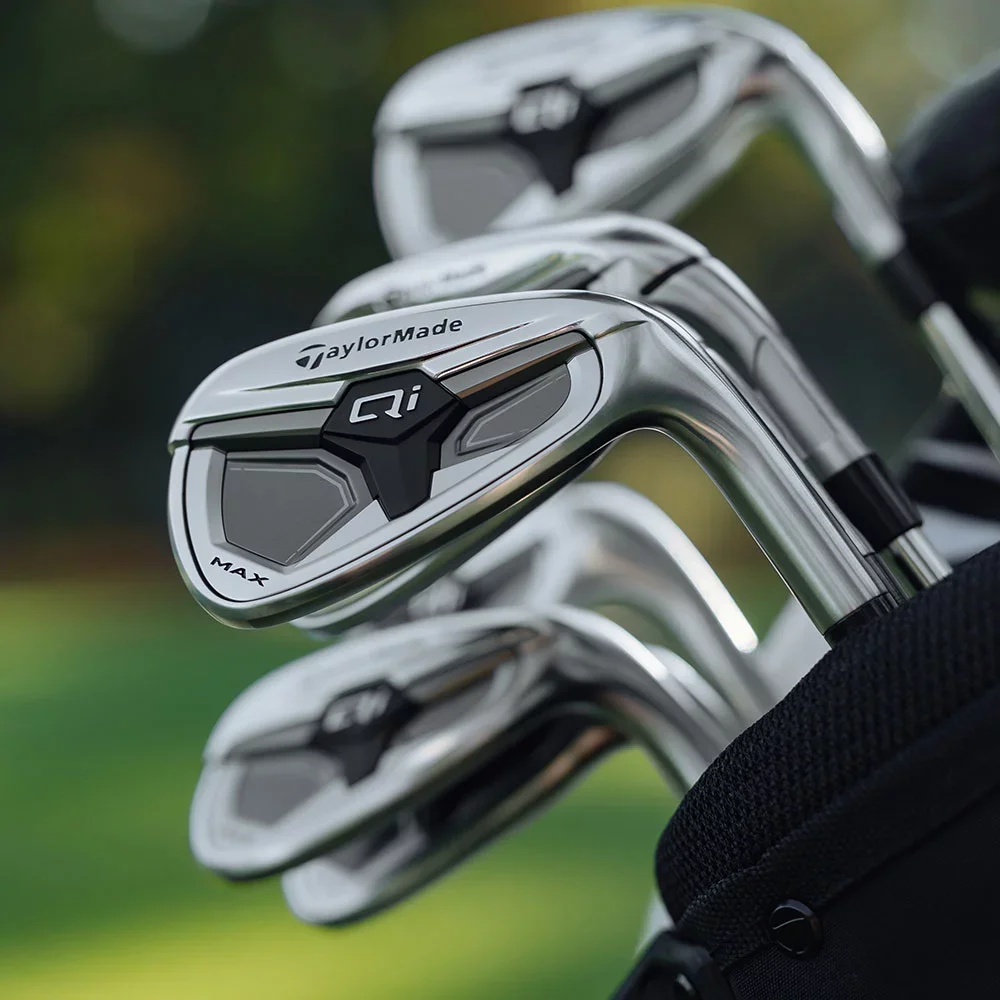
TaylorMade Qi Max irons are aimed at golfers looking for distance and forgiveness in a modern iron design.
They're particularly relevant to players who want an approachable iron set without moving towards a demanding players' profile.
Best for: High and mid-handicap golfers seeking easier performance.
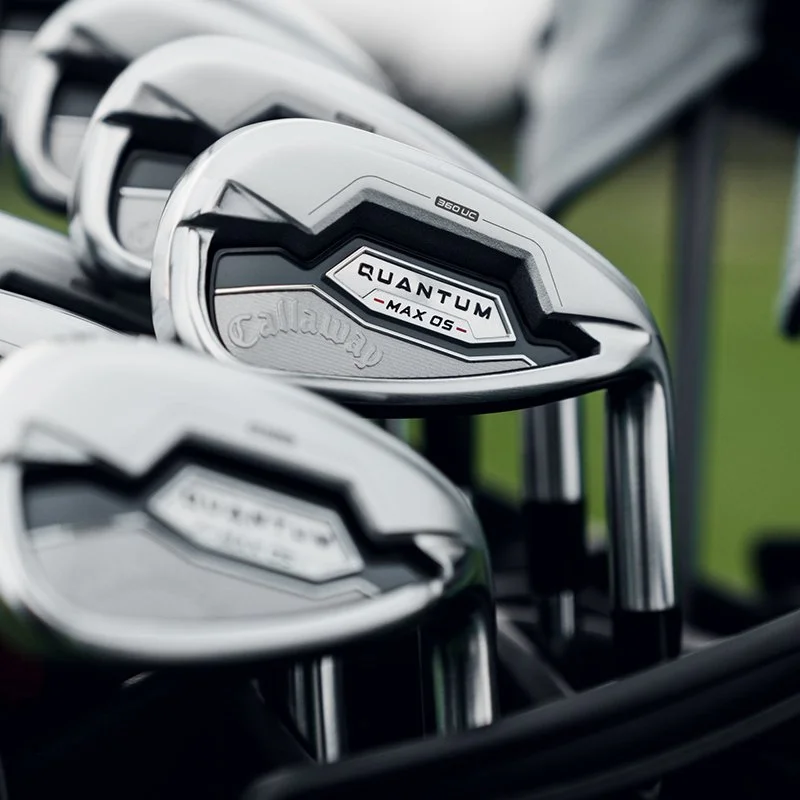
The Callaway Quantum Max OS offers an oversized design and a lower center of gravity for golfers who prefer a larger clubhead appearance, easier launch, and additional forgiveness.
It's worth considering if you struggle with consistent contact or want a club that inspires confidence behind the ball.
Best for: Golfers prioritising easy launch and forgiveness.
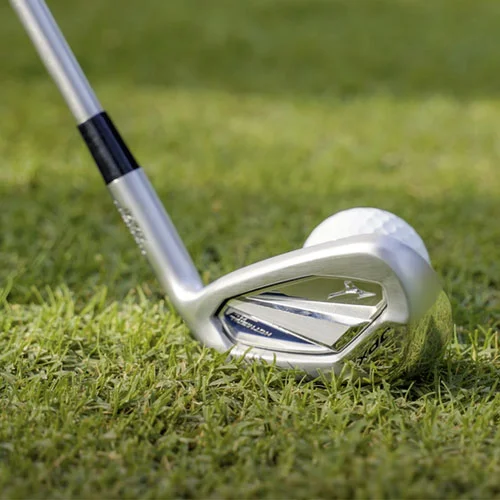
The Mizuno JPX 925 Hot Metal range provides an appealing option for golfers who want game improvement performance without overlooking feel.
It's particularly relevant to improving players looking for a balanced iron set.
Best for: Golfers seeking distance, forgiveness and responsive feel.
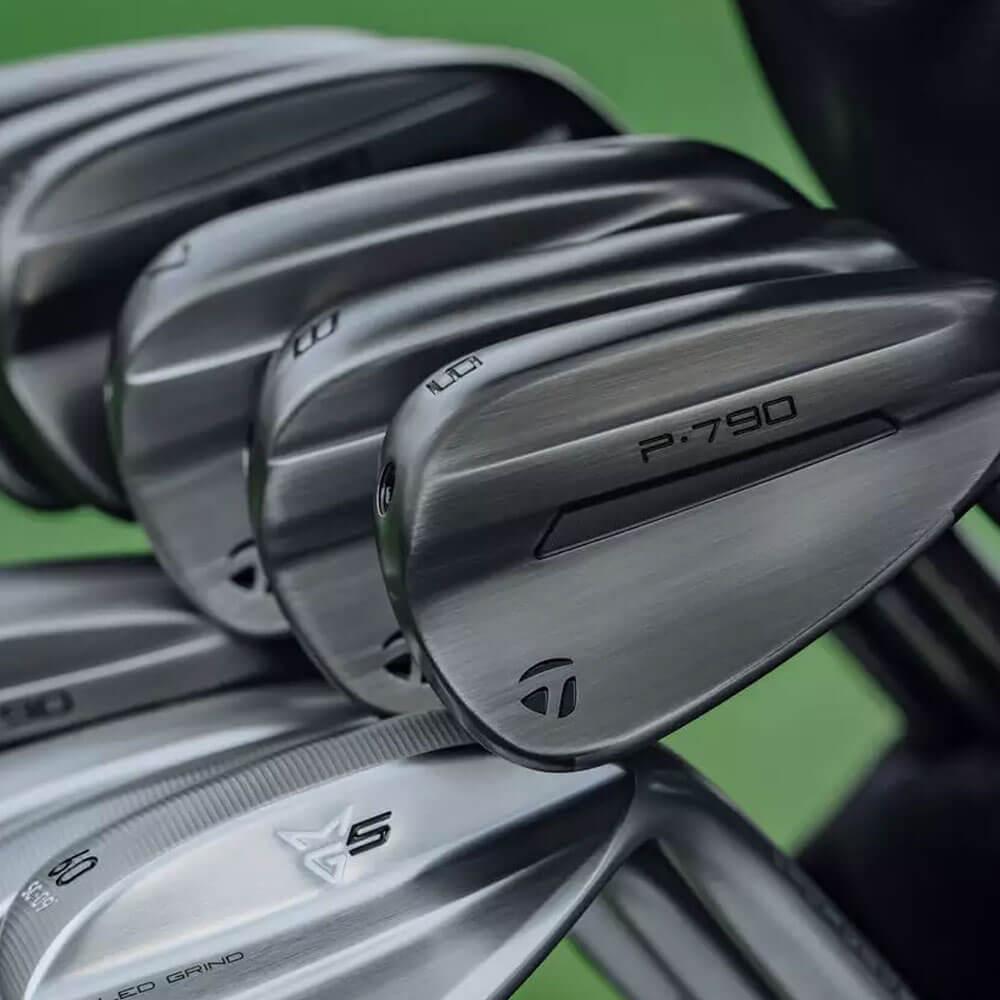
The TaylorMade P790 combines a compact appearance with modern distance-focused construction.
It appeals to golfers who prefer a more refined profile but still want useful assistance with ball speed and forgiveness.
Best for: Confident mid-handicap golfers and accomplished players seeking distance.
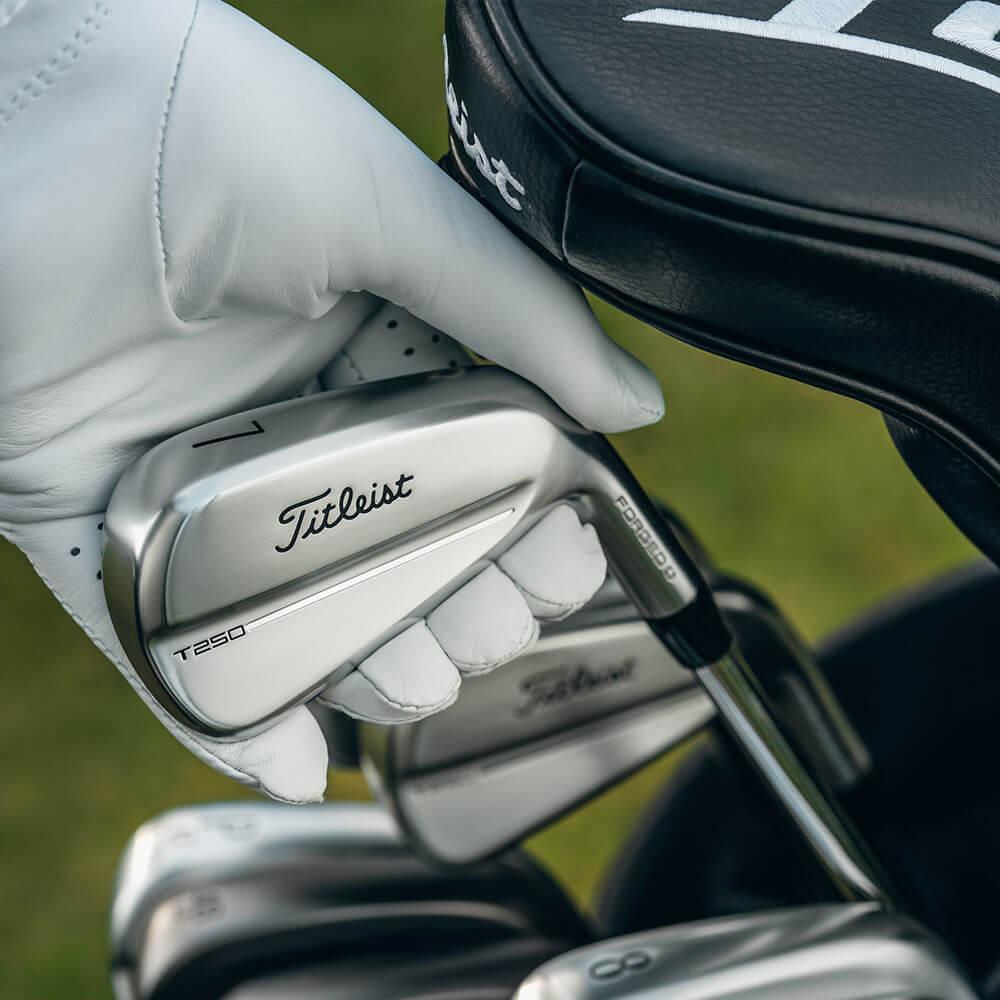
The Titleist T250 occupies the players' distance category, offering a useful alternative for golfers who want a refined appearance alongside modern performance technology.
It deserves consideration if you're looking to move towards a more compact iron without immediately choosing a traditional blade.
Best for: Improving and lower-handicap golfers seeking a balance of distance and control.
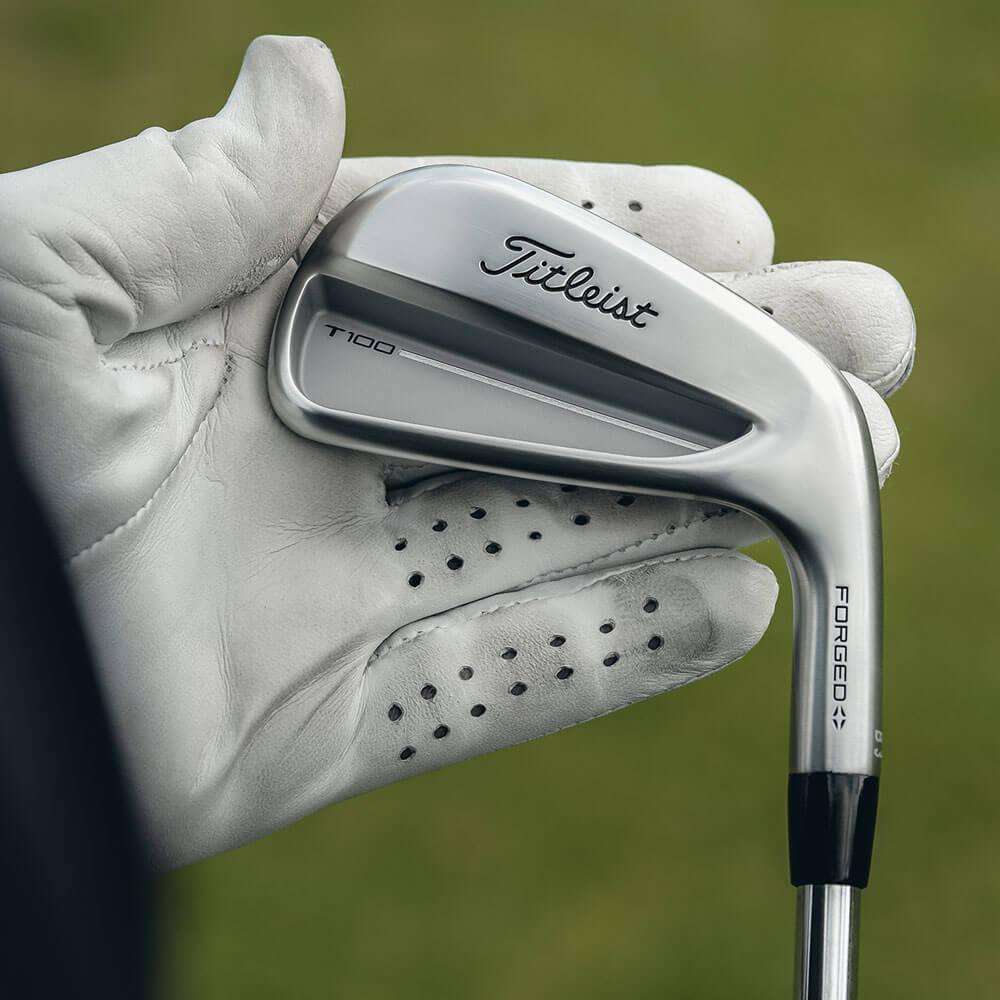
The Titleist T100 is aimed at players who value controlled flight, feedback and a traditional players' appearance.
Its more compact profile makes consistent ball striking especially important.
Best for: Accomplished golfers who prioritise control over maximum forgiveness.
A new set of irons can represent a significant investment, so how much money you want to spend should shape the shortlist from the start, but spending more doesn't automatically guarantee better performance.
Golf Gear Direct stocks options across a wide range of price points, from discounted game improvement sets to premium forged models.
Rather than beginning with the most expensive irons you can afford, establish which design category fits your game.
An older-generation iron that performs well for your swing can be a better purchase than a new premium model that doesn't suit your delivery. Buying second-hand can save money if you check condition and fit carefully.
Also remember that advertised prices can refer to different set configurations or individual clubs. Always compare the included irons, shaft specification and fitting options before making a decision.
If you're investing in a new iron set, custom fitting is worth considering.
A fitting can help assess:
At Golf Gear Direct, our Performance Fitting Centre in Headcorn, Kent, offers golfers the opportunity to explore equipment options and receive advice on suitable specifications.
Custom fitting isn't reserved for low-handicap golfers. Beginners and improving players can also benefit from equipment that suits their build and swing.
Explore Golf Gear Direct Custom Fitting
1. Choosing irons based only on handicap. Your strike pattern and launch conditions are often more useful than a handicap number.
2. Buying the longest irons without checking stopping power. Extra distance is less useful if approach shots won't hold the green.
3. Ignoring shaft weight and flex. Even an excellent clubhead can perform poorly with an unsuitable shaft.
4. Buying long irons you cannot launch consistently. A hybrid may provide a more useful alternative.
5. Choosing appearance over forgiveness. A compact players' iron may look appealing, but confidence and consistency should come first.
The best golf irons aren't necessarily the newest, most expensive or most advanced models on the market.
They're the clubs that help you produce reliable distances, consistent contact and a ball flight you can trust.
For beginners, forgiving models such as Cobra King Max or Callaway Quantum Max OS provide sensible starting points. Improving golfers can explore the Ping G440, TaylorMade Qi Max and Mizuno JPX 925 Hot Metal, while more accomplished players may prefer the performance characteristics of TaylorMade P790, Titleist T250 or Titleist T100.
Before purchasing, consider your strike consistency, preferred feel, shaft requirements and distance gaps. Where possible, compare several models through a fitting rather than relying on specifications alone.
At Golf Gear Direct, we offer a wide range of golf irons from leading manufacturers, helping you find a set that suits your game and budget.
Explore our complete Golf Irons range and find your next set at Golf Gear Direct.