


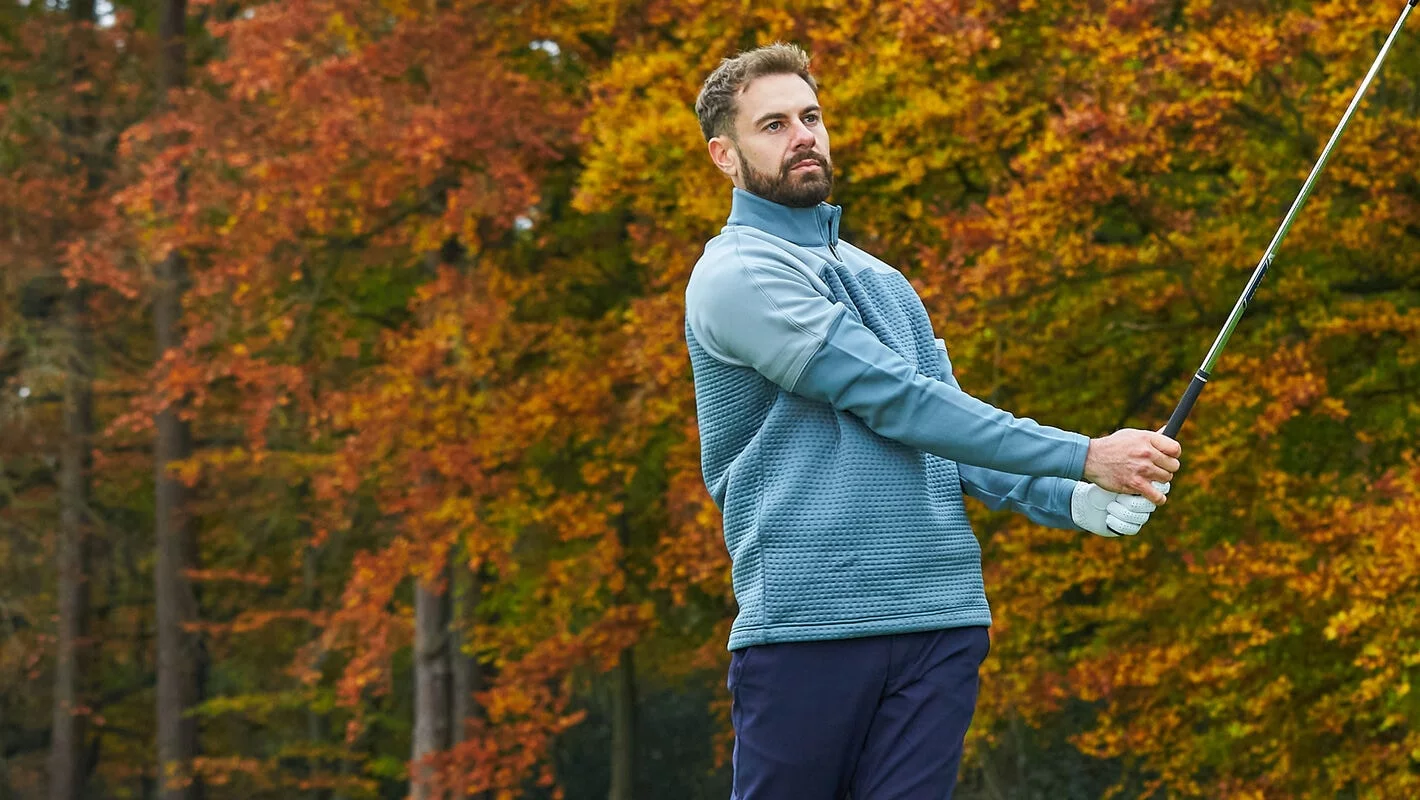
Quick Answer: If you're wondering what to wear for winter golf, the best approach is a flexible layering system that keeps you warm and dry without restricting your swing. Start with a moisture-wicking thermal base layer, add a breathable mid layer for insulation, and finish with a windproof or waterproof golf jacket. Complete your winter golf outfit with warm trousers, waterproof golf shoes, winter gloves, thermal socks and a hat for comfortable play in cold, wet UK conditions.
Knowing what to wear for winter golf can make the difference between enjoying 18 holes and spending the back nine wishing you were back in the clubhouse. For winter golf in the UK, the most effective approach is a flexible layering system: a moisture-wicking base layer, an insulating mid layer and a protective outer layer, supported by suitable trousers, waterproof golf shoes and cold-weather accessories.
The aim is not simply to wear as many clothes as possible. Good winter golf clothing should help you stay warm and dry while preserving the freedom of movement you need to swing naturally.
At Golf Gear Direct, we stock a full range of golf clothing designed for different weather conditions, making it easier to build a winter golf outfit around the conditions in which you actually play.
The best golf layering system normally consists of three parts: a breathable base layer next to your skin, a warm but flexible mid layer and an outer layer chosen according to the weather. Together, these layers help manage moisture, retain warmth and provide protection from wind and rain without relying on one heavy, restrictive garment.
Think of each layer as having a specific job.
Your golf base layer sits closest to your body, so it forms the foundation of your winter golf outfit.
A thermal golf base layer should provide warmth while helping move moisture away from the skin. That moisture management matters because even in cooler weather, walking the course and repeatedly swinging a club can make you sweat. Wearing breathable, moisture-wicking technical fabrics helps you remain more comfortable as your activity level changes.
Golf-specific base layers are particularly useful because they are designed with movement in mind. Stretch materials can fit close to the body without creating unnecessary restriction around the shoulders, arms and torso.
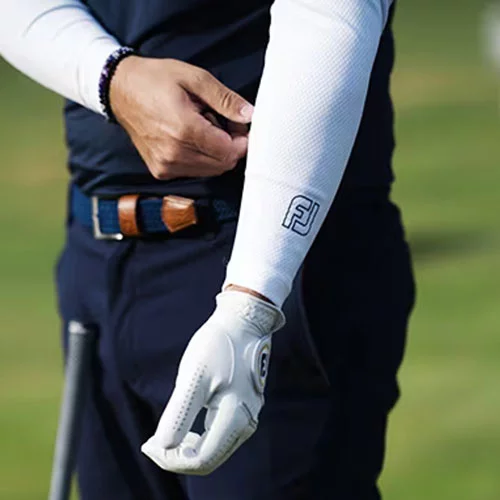
Golf Gear Direct's golf base layers include options from brands such as Galvin Green, Under Armour, FootJoy, Puma and adidas.
For particularly cold conditions, thermal leggings can perform a similar job beneath your golf trousers, adding warmth to the lower body without requiring bulky outerwear.
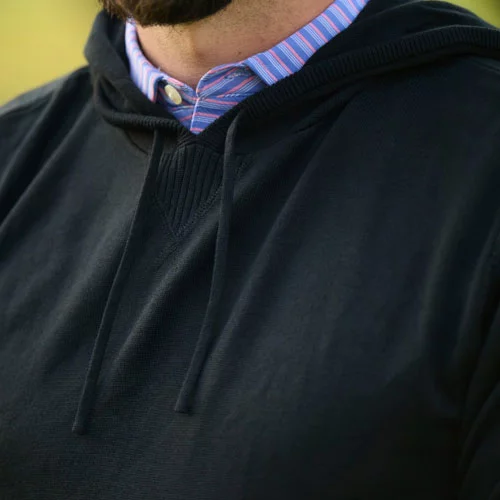
A golf mid layer provides insulation between your base layer and jacket. A quarter zip, technical golf sweater, fleece-backed top or lightweight golf midlayer can provide warmth while remaining flexible enough for your swing.
This is where golf-specific clothing has an advantage over simply putting on a thick everyday jumper. Golf involves rotation through the shoulders, torso and hips, so excessive bulk can interfere with your normal movement.
Look for breathable fabrics, stretch construction and a fit that allows you to turn freely.
A golf sweater or mid layer can also be removed easily if the temperature rises during the round. That adaptability is one of the main benefits of golf layering: rather than committing to one very warm garment, you can adjust your clothing as the weather and your body temperature change.
Your outer layer provides the main barrier between you and the weather. What you choose should depend on whether cold, wind or rain is the biggest problem that day.
A waterproof golf jacket is the logical choice when persistent rain is likely. A windproof golf jacket can provide useful protection on a dry but exposed course, while an insulated jacket can add warmth in cold, relatively settled conditions.
Whatever style you choose, the jacket should allow enough movement through the shoulders and arms to complete your swing.
Golf Gear Direct's range of golf jackets includes waterproof, insulated and lightweight options designed for different conditions.
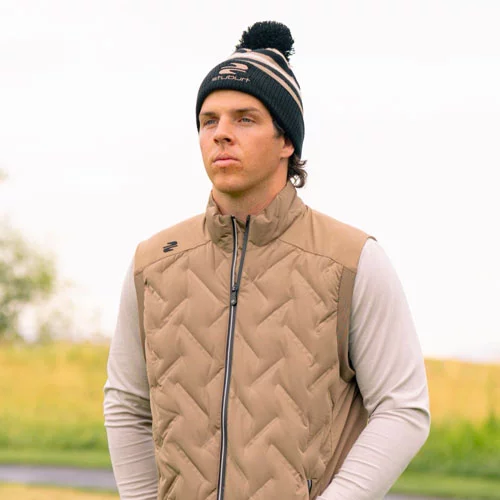
If you want additional core warmth but prefer to keep your arms completely free, a golf gilet can also work effectively as part of your layering system.

For your lower body, choose winter golf trousers that combine warmth, comfort and freedom of movement. In very cold conditions, adding thermal leggings beneath your trousers can provide additional insulation. When heavy or prolonged rain is expected, waterproof trousers worn over your normal golf trousers provide another layer of weather protection.
The same principle applies here as it does to your upper body: avoid unnecessary bulk.
A pair of thermal golf trousers or heavier winter trousers may provide sufficient warmth on a cold, dry day. If the forecast is wet, however, prioritising water protection becomes more important.
Stretch is also useful. Your hips and legs move throughout the golf swing and while walking the course, so winter golf clothes should allow natural movement rather than simply providing insulation.
Browse Golf Gear Direct's golf trousers to compare options suitable for cooler conditions.
You do not necessarily need to wear waterproof jackets and waterproof trousers for every winter round, but carrying waterproof clothing is sensible when conditions are changeable. A waterproof outer shell provides a barrier against rain, while the layers underneath continue to manage warmth and moisture.
The distinction between waterproof and insulated clothing is worth understanding.
An insulated jacket is primarily intended to provide warmth. A waterproof jacket is primarily designed to prevent rain reaching the layers underneath. Some garments combine multiple forms of weather protection, but you should always check the individual product specification rather than assuming that a warm jacket is fully waterproof.
For UK winter golf, versatility is particularly useful. If the morning begins cold and dry before rain moves in, being able to add a waterproof outer layer without rebuilding your entire outfit can make all the difference.
The most useful winter golf accessories include winter gloves, a warm golf hat or beanie, thermal socks and, in particularly cold conditions, hand warmers or mittens. These accessories protect areas that can become uncomfortable quickly without adding bulk around the torso or shoulders.
Cold hands can make gripping the club uncomfortable, while wet conditions create an additional grip challenge.
Purpose-designed winter golf gloves provide more protection than a standard golf glove. Wet-weather gloves are another useful option when rain rather than temperature is the main concern.
Golf Gear Direct stocks golf gloves, including winter and rain-specific designs. If you want to compare the options in more detail, our guide to the best winter golf gloves explains what to look for.
A winter golf hat or beanie provides straightforward cold protection without affecting your swing. Choose something comfortable and secure enough to stay in position in windy weather.
A good pair of thermal golf socks adds insulation inside your shoes. Make sure the combination of sock thickness and footwear still fits comfortably; excessively thick socks inside tight shoes can become uncomfortable during a full round.
Hand warmers or golf mittens can provide additional warmth between shots without requiring you to change your normal grip setup.
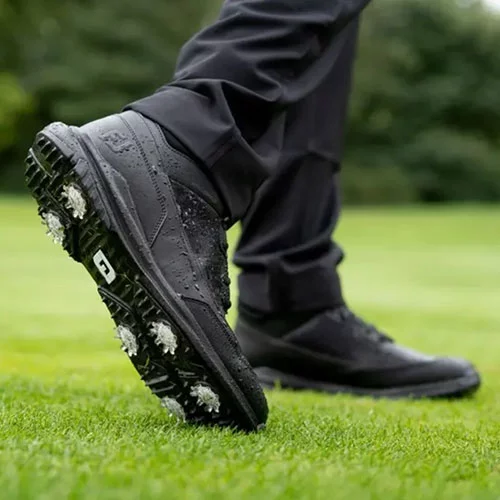
Winter golf shoes should provide reliable traction on soft or wet ground while helping keep your feet dry. Waterproof golf shoes are therefore particularly useful during the colder months, when rain, dew and saturated ground can remain a problem throughout an entire round.
Grip deserves just as much consideration as waterproofing.
Soft ground can reduce stability, particularly during the rotational forces of a golf swing. Spiked golf shoes can provide additional traction in wetter conditions, although the right choice ultimately depends on the course, conditions and your preferences.
Golf Gear Direct offers a broad selection of golf shoes, including waterproof and spiked options designed for wetter conditions.
Pair suitable winter golf shoes with warm socks and you have a much stronger foundation for staying comfortable from the first tee to the final green.
The right golf clothing layers should change with the conditions. On a cool, dry day, a base layer and golf midlayer may be enough. As temperatures drop, add insulation. In wind or rain, use an appropriate protective outer layer rather than simply adding more thick clothing underneath.
A practical approach might look like this:
The benefit of this approach is adaptability. If you become too warm after walking several holes, you can remove a mid layer. If rain arrives, you can add your waterproof outer layer.
Effective golf layering is therefore less about finding one perfect winter jacket and more about building a collection of compatible garments.
To stay warm without restricting your swing, choose several lightweight, technical layers instead of one bulky coat. Stretch fabrics around the shoulders, arms and torso support freedom of movement, while breathable and moisture-wicking materials help regulate comfort as your body warms during the round.
Fit is equally important.
Your base layer can sit relatively close to the body, but your mid and outer layers need enough room to accommodate the clothing beneath them. At the same time, excessively loose jackets can move around during the swing and become distracting in windy weather.
Before committing to a winter golf outfit, make a few full practice swings while wearing the complete combination. Check whether you can rotate normally and whether any fabric pulls tightly across your shoulders or back.
If your layering system keeps you warm but changes the way you swing, it is not doing its job properly.
If you are building your first winter golf outfit, start with versatile essentials rather than buying multiple versions of the same garment. A thermal base layer, adaptable midlayer, protective jacket, suitable trousers, waterproof golf shoes, winter gloves and a warm hat provide a practical foundation.
Your first winter golf clothing collection could include:
You can then expand your collection based on experience. A golfer who regularly plays an exposed, windy links course may prioritise windproof golf clothing, for example, while someone frequently playing in heavy rain may get more value from investing in high-quality waterproof golf clothing.
The best answer to what to wear for winter golf is not simply "more clothes". An effective winter golf layering system gives every garment a purpose.
Your base layer manages next-to-skin comfort and warmth. Your mid layer adds insulation. Your outer layer protects against the weather. Winter trousers, waterproof golf shoes, gloves, socks and a hat then complete the system.
Most importantly, every layer should work together without preventing you from moving freely through your golf swing.
Golf Gear Direct stocks golf clothing, shoes, gloves and accessories from leading golf brands, giving golfers the flexibility to build a winter setup around their budget, playing habits and typical weather conditions. You can shop Golf Gear Direct's golf clothing range or contact the team for help choosing suitable clothing for your winter rounds.
General guidance only: weather conditions and individual tolerance to cold vary considerably. Check the forecast and course conditions before playing and choose clothing appropriate to the conditions.